Featured Image Note: `images/04-ai-toy-boom-hero.png` — AI toy market illustration for hero/header placement.
In January 2025, a plush robot with OLED eyes and a 37°C body temperature made its debut at CES. It could recognize faces, respond to emotions, and develop a unique personality with each user. Within one month of launch, Ropet had 10,000 preorders. By mid-2025, it had raised millions in funding and was shipping to North America, Europe, Japan, and South Korea.
Ropet is not an outlier. It's the tip of a very large iceberg.
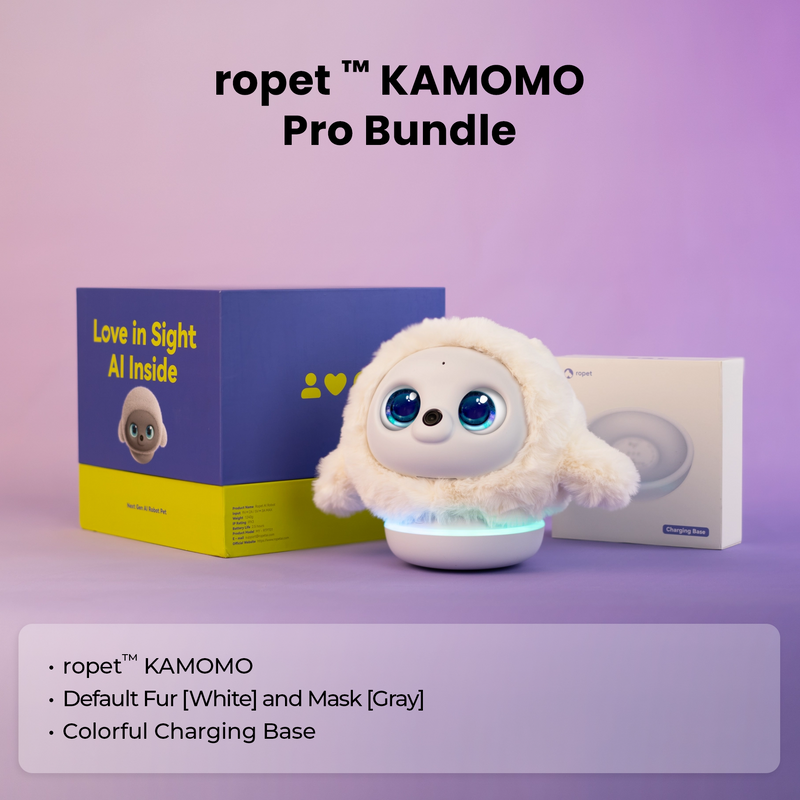
Ropet: A plush robot with OLED eyes, body heated to human temperature, and AI-driven emotional responses. 10,000 preorders in the first month. (Photo: Ropet official)
China's AI toy market — a category that barely existed three years ago — hit $18.1 billion globally in 2024 and is projected to reach $60 billion by 2033. On JD.com, AI toy sales surged 200% year-over-year in the first half of 2025. On Taobao, more than 1,000 product SKUs now carry "AI" or "smart" labels.
For overseas AI founders watching from the sidelines, this isn't just a consumer trend. It's a masterclass in how AI hardware gets built, scaled, and shipped — fast.
The Products: What's Actually Selling
Forget the abstract "AI companion" pitch. Here's what real products look like on the ground in China right now:
Ropet — The $299 AI Pet That Went Viral
- Company: Ropet (Shenzhen-based)
- Price: $299
- What it does: A plush companion with animated OLED eyes, body heated to human temperature, an AI-driven emotional engine, and personality-building features via a companion app. Users shape behavior over time.
- Traction: ~10,000 preorders in the first month. 83%+ daily active user engagement. 70% of Kickstarter backers were women — a demographic traditionally absent from hardware crowdfunding.
- Supply chain angle: Entirely Shenzhen-manufactured. The warm-body feature (sustained 37°C) and the emotional AI stack were the hardware-software integration challenges.
Sirius — The $1,299 Robot Dog With 14-Axis Motion
- Company: Hengbot Innovation (Chongqing)
- Price: $1,299
- What it does: A 1 kg quadruped robot with 14 axes of motion, proprietary "Neurocore" joints, and AI-powered behavioral evolution. It plays soccer, dances, and develops a unique bond with each user.
- Supply chain angle: The Neurocore joint system is a custom mechatronic component — servo motors, encoders, and controllers integrated into a single module. This is the kind of hardware differentiation that requires deep factory collaboration, not just off-the-shelf parts.
Alpha Egg — 1.8 Million Units in 6 Months
- Company: iFlytek (Hefei)
- Price: ~$50-80 (educational segment)
- What it does: A screenless reading companion that identifies 30,000 picture books, generates weekly literacy reports, and uses iFlytek's 7-billion-parameter distilled model with 600+ patents in child-speech recognition.
- Traction: 1.8 million units shipped in H1 2025. 45% exported.
- Supply chain angle: iFlytek didn't just license an LLM — they built a vertically integrated stack: proprietary child-speech recognition, distilled models, and custom hardware. This is the "software defines the hardware, then factory scales it" model.
Fuzai (福仔) — Gen Z's Pocket Companion
- Company: Robopoet (Shanghai)
- Price: ~$30-50
- What it does: A plush bag charm with multimodal AI interaction via LLMs. Chats naturally, connects users socially with a "tap to add friends" feature, and targets young adults living alone.
- Supply chain angle: Ultra-low BOM. The plush exterior + embedded AI chipset + companion app = a product that could only exist because China's supply chain drives component costs to near-zero for volume production.
BOOBOO — The Flying Emotional Drone
- Company: Yuling Infinite (Beijing)
- What it does: A bionic flapping-wing companion drone that hovers indoors, recognizes user emotions via camera, and responds with light, motion, and voice. Founded by a Gen Z NASA-background founder.
- Supply chain angle: This is the bleeding edge — miniaturized flapping-wing mechanics + onboard AI vision + emotional computing, all in a consumer-priced package.
The Numbers: Why This Market Is Moving So Fast
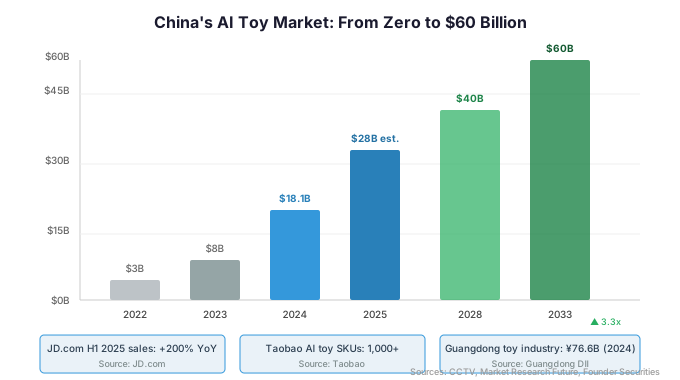
The global AI toy market has grown from near-zero to $18.1B in three years, with a projected trajectory to $60B by 2033. JD.com saw +200% YoY growth in H1 2025.
| Metric | Data | Source |
|---|---|---|
| Global AI toy market (2024) | $18.1 billion | CCTV / Market Research Future |
| Projected (2033) | $60 billion | Market Research Future |
| China AI toy market (2028 est.) | ¥30-40 billion ($4-5.5B) | Founder Securities |
| JD.com H1 2025 sales growth | +200% YoY | JD.com |
| Taobao AI toy SKUs | 1,000+ | Taobao |
| Alpha Egg H1 2025 shipments | 1.8 million units | iFlytek |
| Ropet first-month preorders | ~10,000 units | Ropet CEO |
| Guangdong toy industry revenue (2024) | ¥76.6 billion | Guangdong DII |
| Guangdong toy exports (2024) | ¥105.3 billion (37% of national) | Guangdong DII |
The Guangdong provincial government estimates that integrating AI into traditional toys could add ¥100 billion to the industry — pushing total output past ¥300 billion. Dongguan and Shantou have been designated as AI toy industry clusters.
Three Supply Chain Lessons for Overseas AI Founders
1. The Shenzhen-Dongguan Corridor Is Already Tooled for AI Hardware
Dongguan alone produces a staggering share of the world's toys. When the AI wave hit, the factories didn't need to be retooled — they just needed to integrate AI modules into existing production lines.
Takeaway: If you're building an AI consumer device, you're not starting from scratch. The injection molds, PCB assembly lines, and packaging workflows already exist. Your job is to find the factory that's already shipped 500,000 units of a similar form factor — and add your AI layer on top.
2. Price Points Are Collapsing — But That's Good News
Three years ago, adding a voice assistant to a toy would add $15-25 to the BOM. Today, with LLM API costs down 90% from 2023 levels and domestic AI chips proliferating, the incremental cost of "making a toy smart" has dropped to $3-8.
This means two things:
- Consumer AI hardware is becoming a volume game. If your BOM can't hit a $30-50 retail price, you're competing in a shrinking window.
- The opportunity is in premium emotional AI, not basic voice commands. Everyone can add a chatbot. Few can make a product that actually feels alive.
Takeaway: Don't compete on "it talks back." Compete on "it understands you."
3. Export-Ready from Day One
Alpha Egg ships 45% overseas. Ropet launched globally before local. Fuzai was designed for both Chinese and international Gen Z audiences. These companies are building for global markets from day one — and they're using China's supply chain speed to out-iterate competitors.
Takeaway: If your AI hardware product is still in "US/Europe first, Asia later" mode, you're moving too slowly. The Chinese AI toy ecosystem iterates in 6-8 week cycles. By the time you launch in one market, three competitors will have already pivoted to your space.
The Big Picture: Why This Matters Beyond Toys
The AI toy boom in China is not really about toys. It's a real-world stress test of the entire AI hardware value chain:
- Chips: Domestic AI accelerators that needed a consumer use case
- Models: Distilled LLMs that needed a low-latency, offline-capable deployment target
- Factories: Production lines that needed to add AI integration to stay competitive
- Brands: Companies that needed to prove they could ship AI hardware globally
The toys are the canary in the coal mine. If China can ship 10 million AI companion devices in 2026, they can ship 10 million AI wearables, AI home devices, or AI health monitors next year.
For overseas AI founders, the question isn't whether to engage with this ecosystem. It's whether you're moving fast enough to ride the wave — or watching it from shore.
Golden sentence: "The machines that win aren't the smartest — they're the ones that shipped first."
Ready to Ship Your AI Hardware Product?
If you're building an AI consumer device — whether it's a toy, wearable, or smart home product — you need a partner who knows the Shenzhen ecosystem from the inside. We help AI hardware projects go from prototype to production.
[Book a Free Assessment Call →] NDA signed before we hear a word about your product. No commitment.
This is part four of aixumo's Insights series. Read Part 1 for the software-to-hardware mindset gap, Part 2 for AI hardware case studies, and Part 3 for navigating Shenzhen's supply chain.
Whether you have a working prototype or just a hypothesis about what your users want to hold, Aixumo can map the path forward.
Share your current stage. We'll help you identify the hardware route, productization risks, and the practical next move before you spend money on the wrong supplier conversation.