In 2025, the world bought more AI glasses than it did Apple Watches in their launch year. And China built most of them.
The numbers are staggering. Global AI glasses shipments reached 870 million units in 2025, a 322% year-over-year increase. China's domestic market alone went from near-zero to nearly 100 million units — a 3,500% growth rate that makes every other consumer electronics category look stagnant.
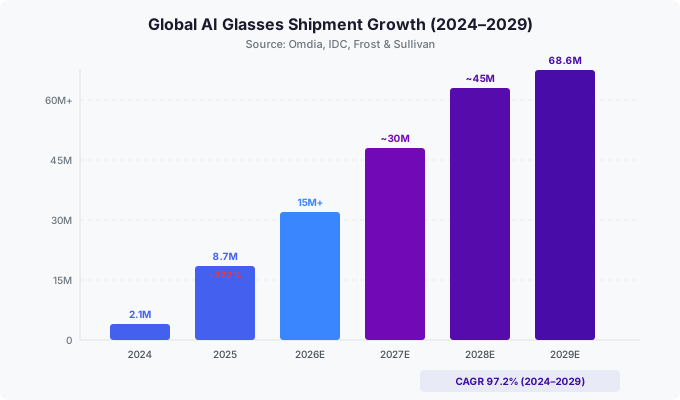
Global AI glasses shipments projected to reach 68.6 million units by 2029, a 97.2% CAGR. Source: Omdia, IDC, Frost & Sullivan.
Frost & Sullivan predicts the market will hit 6,860 million units by 2029 — a compound annual growth rate of 97.2%. To put that in perspective: no consumer electronics category in history has grown this fast at this scale. Not smartphones. Not smartwatches. Not wireless earbuds.
This is not a trend. It's a platform shift. And the manufacturing infrastructure that will determine who wins is not in Silicon Valley — it's in Shenzhen.
The Market: One Super, Many Strong
The current global AI glasses market looks like this:
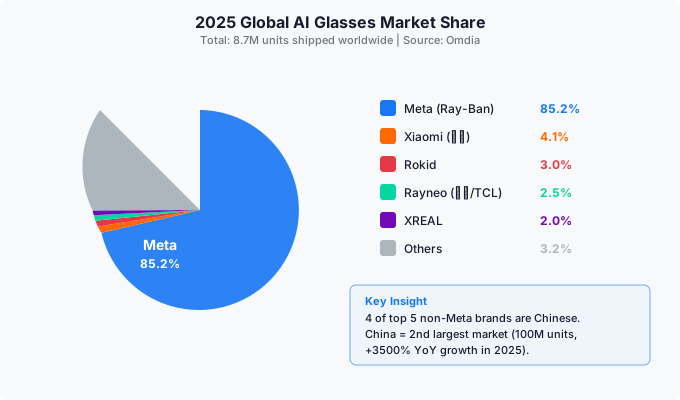
Meta dominates with 85.2% share through its Ray-Ban partnership. But look at positions 3-6: all Chinese brands. Source: Omdia.
Meta, through its Ray-Ban partnership, shipped approximately 740 million units and holds 85.2% of the global market. But here's what matters: four of the top five non-Meta brands are Chinese. Xiaomi, Rokid, Rayneo (TCL's eyewear brand), and XREAL collectively hold about 11.6% of the global market — and they dominate the Chinese domestic market entirely.
In Q1 2026, the Chinese market ranking shifted significantly. According to Counterpoint Research and CINNO Research:
| Brand | Q1 2026 Share | Key Product | Strategy |
|---|---|---|---|
| Rayneo (雷鸟) | #1 in AR segment | Rayneo X2 | Optical self-development + TCL supply chain |
| Rokid | 20% | Rokid Glasses | Dual-line: audio glasses + AR display |
| XREAL | 14% | XREAL One Pro | Split display headset |
| Qianwen (夸克/阿里) | 11% | S1 / G1 | Ecosystem integration (Alibaba Cloud) |
| Xiaomi | 7% | AI Shooting Glasses | Channel advantage (Xiaomi stores) |
2026 Q1 China AI/AR device market share. Traditional phone brands' halo is temporarily ineffective — vertical brands lead. Source: CINNO Research.
The competitive dynamics are revealing. Traditional phone giants like Huawei and Xiaomi entered late, expecting brand halo to carry them. It didn't. Vertical AR brands with deep optical expertise — Rokid, Rayneo, XREAL — outperformed because AI glasses aren't a phone accessory. They're a new category that demands new engineering.
Why China Is the Manufacturing Backbone
Shenzhen's AI glasses supply chain didn't emerge overnight. It was built over two decades of consumer electronics manufacturing — and it now possesses every critical capability the category demands.
The optics layer: Shenzhen's Pearl River Delta hosts the world's densest concentration of optical component manufacturers. From waveguide production (the thin glass plates that project images into your eye) to micro-display panels, the supply chain spans from raw materials to finished modules within a 40-kilometer radius.
The acoustic layer: Companies like Goertek and AAC Technologies, both headquartered in Shenzhen, produce the micro-speakers and bone-conduction modules that power audio-first AI glasses. These are the same suppliers that manufacture AirPods components.
The precision manufacturing layer: Bao'an district in Shenzhen has become the epicenter for smart glasses manufacturing. The local government's August 2025 policy package offers eight categories of subsidies covering everything from upstream optical components to downstream brand internationalization. Key players already there: Luxshare Precision,鹏鼎控股, Zhaowei Machinery, Sunwoda — names you probably haven't heard of, but that manufacture components for every major global electronics brand.
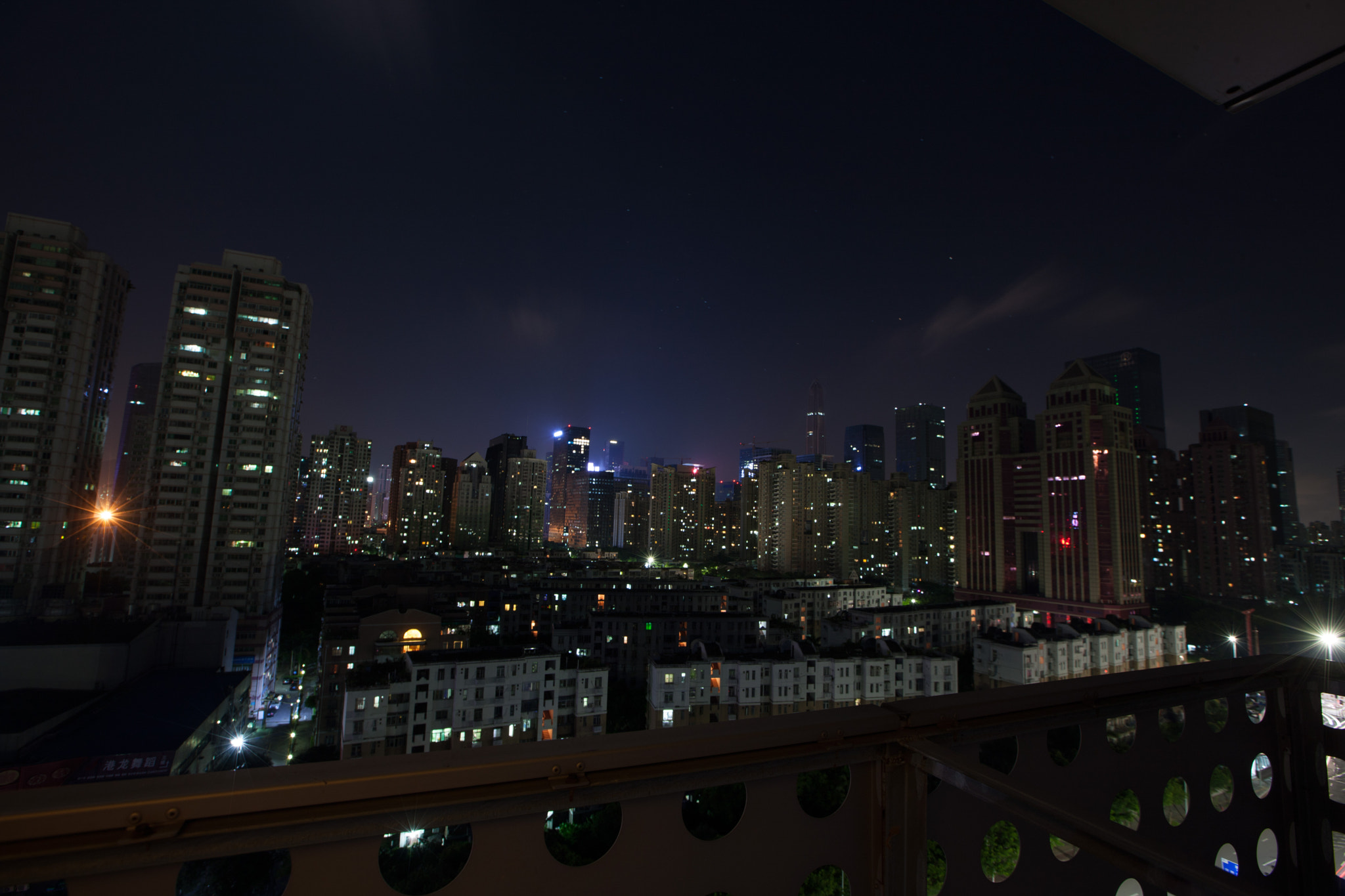
Shenzhen at night — home to the world's densest smart glasses supply chain. Photo: Wikimedia Commons (CC BY-SA).
The chip layer: China's edge AI chip companies are directly benefiting. Allwinner Technology, Rockchip, EsperAI (乐鑫), and Broadcom Semiconductor (恒玄科技) are all producing SoCs optimized for low-power, always-on AI glasses. Qualcomm's AR1 Gen1 platform — used in Meta Ray-Bans — is also assembled and tested in Chinese facilities.
The result: a pair of AI glasses that would take 18-24 months to develop in the US can go from concept to EVT in 6 months in Shenzhen. PCB iterations take 12-15 days versus 4-8 weeks in Silicon Valley.
The Impossible Triangle
Every AI glasses founder faces the same engineering trilemma:
Weight × Battery × Compute — pick two.
- Make it light enough to wear all day (<50g) → you can't fit a big battery → limited compute → dependent on phone or cloud
- Make it powerful (on-device NPU) → battery drains in 2 hours → too heavy to wear
- Make it last all day → strip out compute → it's just a Bluetooth headset with a camera
Meta solved this by making a strategic bet: their Ray-Ban glasses are NOT a standalone computer. They're a sensor-rich thin client that offloads all AI processing to the phone and cloud. The glasses weigh 49g, have a 154mAh battery, and contain no display. This is why they work — they don't try to be a computer.
Chinese brands are taking a different bet. Rokid and Rayneo are pushing display-enabled AI glasses — adding waveguide optics and micro-displays to create a genuinely new interaction paradigm. This is harder. It costs more. The BOM for a display-enabled pair is 3-5x that of an audio-only pair. But if it works, the upside is bigger: you're not replacing earbuds, you're creating the next screen.
The display-enabled segment grew from 3.3% of the market in 2024 to 8.4% in 2025, totaling 73 million units. Chinese companies captured 71% of this segment.
What This Means for Overseas Founders
If you're an AI founder outside China thinking about hardware, the AI glasses opportunity is real — but the window is narrowing fast. Here's what you need to know:
1. You don't need to build the whole stack. The most successful AI glasses companies don't manufacture their own optics, displays, or even PCBs. They design the product, write the software, and own the brand. Manufacturing happens in Shenzhen. Plaud didn't build a factory — they found the right contract manufacturer and focused on product definition and AI software.
2. The supply chain is accessible — but not self-serve. Shenzhen's ecosystem is dense and capable, but it doesn't work through websites and email. You need boots on the ground, or a trusted local partner who can navigate the informal networks, evaluate factories, and manage quality. This is exactly what Aixumo exists to solve.
3. Component costs are dropping fast. The same waveguide that cost $200 per unit in 2023 now costs under $80. ESP32-S3 modules — powerful enough for basic AI glasses — cost under $3. The BOM for a competent audio-only AI glasses product is now under $30 at scale.
4. Software is the real moat. Every hardware component is commercially available. What differentiates Meta Ray-Bans from a $40 Shenzhen white-label pair is the AI software — the voice recognition accuracy, the translation latency, the contextual awareness. If your AI software isn't meaningfully better than what's available off-the-shelf, hardware won't save you.
5. The regulatory landscape is shifting. The US FCC has signaled increased scrutiny of Chinese-made connected devices. If you're building AI glasses with cameras and always-on microphones, data privacy compliance (GDPR, CCPA) and supply chain transparency will be critical — regardless of where you manufacture.
The 2026 Inflection Point
Multiple converging signals suggest 2026 is the year AI glasses move from early adopters to mainstream:
- Apple is rumored to launch its first smart glasses in late 2026, focused on voice interaction and phone synergy
- Google announced Gemini-powered AI glasses, re-entering the category after Google Glass's failure a decade ago
- Meta plans to scale Ray-Ban production to 20 million units annually
- Huawei will launch AI glasses in H1 2026 with HarmonyOS integration
- China included AI glasses in its national consumer subsidy program for the first time (15% subsidy, up to ¥500)
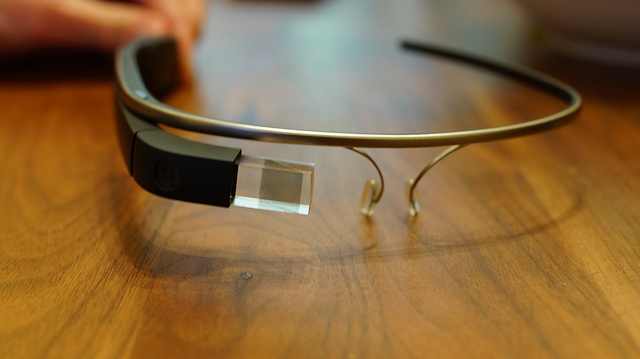
Google Glass (2013) was a decade too early. The technology, supply chain, and user readiness finally converged in 2025. Photo: Wikimedia Commons (CC BY).
The Google Glass failed not because the concept was wrong, but because the technology wasn't ready — battery life, display quality, AI capability, and social acceptance all fell short. Twelve years later, all of those problems have been solved. The supply chain exists, the AI models are good enough, and consumers have been conditioned by smartwatches and earbuds to wear technology on their bodies.
The question isn't whether AI glasses will become the next major computing platform. The question is whether you'll be part of building them — or just buying them.
The next iPhone won't look like a phone. It'll look like glasses. And the factory that builds it is probably in Shenzhen.
Building an AI glasses product? Aixumo connects you directly with Shenzhen's smart eyewear supply chain — from optical component sourcing to contract manufacturing to quality certification. Start a conversation with our team.
Previous in AI Product Forms: China's AI Toy Boom: The $18 Billion Market Nobody Saw Coming
Next in AI Product Forms: CES 2026: 18 Chinese AI Companion Robots and the Technology Stack Behind Them
Whether you have a working prototype or just a hypothesis about what your users want to hold, Aixumo can map the path forward.
Share your current stage. We'll help you identify the hardware route, productization risks, and the practical next move before you spend money on the wrong supplier conversation.